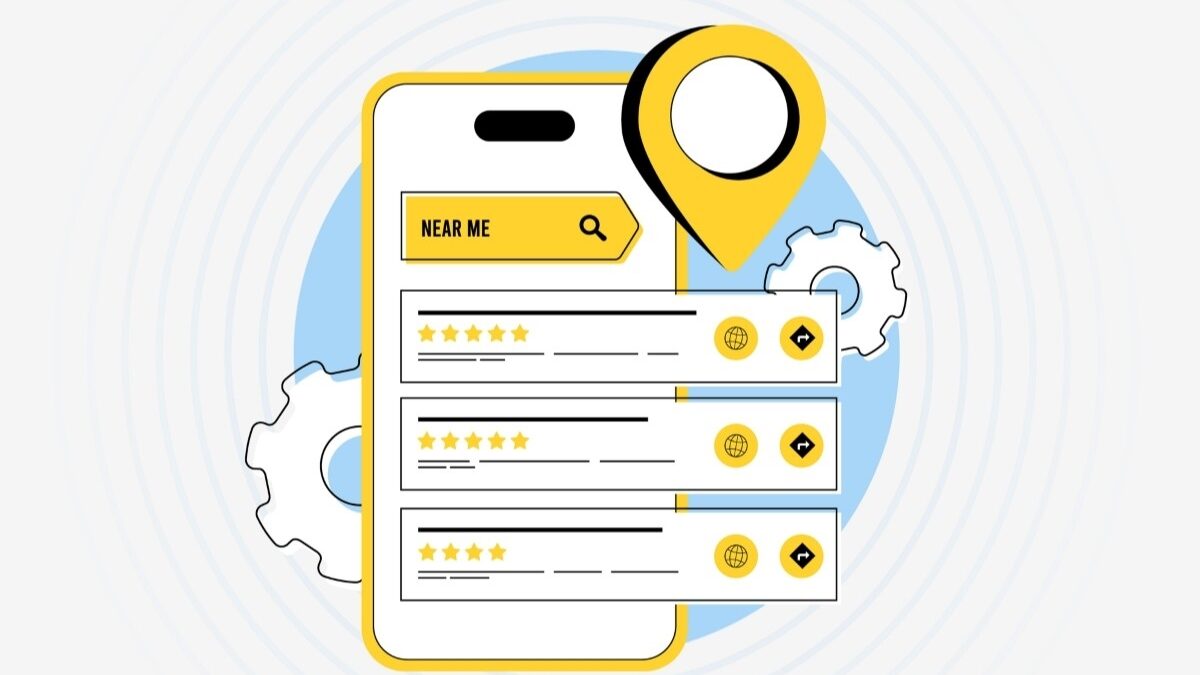
Patients Don’t Search the Same Way Anymore
When patients look for care, they’re not typing full sentences or visiting multiple websites. They’re asking their phones, “Where’s the nearest urgent care?” or saying to a voice assistant, “Find a pediatrician open now.”
These simple, conversational requests are what Google calls “near me” searches, and they’ve reshaped how medical practices attract new patients. According to Google’s own data, local-intent queries (those including phrases like “near me” or “closest”) have grown by more than 200% in the past few years.
For medical practices, that growth is a roadmap. The patients you want to reach are already searching locally, in real time, on their phones. The question is whether your practice appears when and where they’re looking.
The new rules of “near me” search favor the practices that communicate clearly, consistently, and conveniently across every digital touchpoint.
How Google Interprets “Near Me”
When someone searches “doctor near me,” Google doesn’t rely on keywords alone. Its algorithm (the automated system that determines what appears first) evaluates three primary factors:
Relevance: How closely your information matches the search.
Distance: How physically close your practice is to the searcher.
Prominence: How trustworthy and well-established your practice appears online.
Each factor is driven by what Google can verify about your practice. If your business name, category, and location details are accurate and your Google Business Profile is complete, you gain relevance. If your address and service area are properly mapped, you gain distance accuracy. If you maintain consistent reviews and active engagement, you gain prominence.
Together, those signals tell Google you’re a credible, nearby provider. The more confidence the algorithm has in your information, the higher you’ll appear in “near me” results.
Voice Search and the Rise of Conversational Queries
“Near me” searches are increasingly voice-based, happening through mobile assistants and smart devices. Voice search uses natural language processing to interpret what people say, not what they type.
Patients don’t ask their phones, “Primary care physician local SEO Phoenix.” They ask, “Who’s the best family doctor near me taking new patients?
This shift means your online information must read and sound natural. Avoid stuffing pages with repetitive keywords. Instead, focus on patient-friendly phrasing and concise, factual details: “We provide same-day appointments in [city].” “Our office on [street name] offers walk-in visits for urgent needs.” “Find our clinic near [local landmark].”
Google recognizes conversational structure. Incorporating these elements into your website copy and Google Business Profile descriptions makes your practice easier to match with voice-driven searches.
Accuracy and Completeness: The New Baseline
In “near me” searches, precision matters. Patients expect the information they see to be current, and Google does, too. Listings that are incomplete or outdated are quickly deprioritized.
To stay visible, practices should regularly verify: Hours (update immediately for holidays or seasonal changes), phone numbers (ensure they route correctly and are answered promptly), addresses and maps (confirm pins and driving directions are correct), and services (keep offerings and specialties up to date).
Completeness builds confidence. When Google sees accurate, detailed listings, it assumes your practice is active and well-managed. Patients assume the same.
Local Reviews and Engagement Drive “Near Me” Rankings
Google interprets patient activity (especially reviews) as proof of relevance. A steady stream of authentic, recent feedback tells the algorithm your practice is both popular and trusted.
The most impactful review profiles show consistent new feedback over time, reflect local engagement (“Great experience at the [city] office”), and receive thoughtful, professional responses from the practice. A structured reputation management system helps practices build and maintain these review profiles consistently.
These elements improve ranking potential and also directly influence patient choice. In “near me” search results, reviews are often displayed before a user even clicks through. A five-star rating paired with clear directions can convert instantly.
Preparing for the Future of Proximity Search
Google continues to refine how it personalizes results based on a user’s context, such as location, history, and preferences. For medical practices, this means your online presence must be both geographically specific and universally reliable.
In the next few years, AI-driven search summaries and zero-click results will continue to grow. Patients will rely even more on what they see directly in Google’s listings rather than on external websites.
To prepare, practices should: Maintain verified and detailed Google Business Profiles for every office. Use natural, conversational phrasing that matches how patients ask for care. Encourage ongoing reviews and respond promptly. Audit listings quarterly for accuracy and consistency.
Winning Locally Without Advertising
The good news is that success in “near me” search isn’t tied to ad budgets. It’s tied to effort and accuracy. Practices that commit to maintaining their information and engaging authentically outperform larger organizations that rely solely on paid campaigns.
Google’s goal is to help users find the best option nearby, not the biggest advertiser. That’s why smaller, patient-centered practices often dominate local results: they’re genuinely local, visible, and trusted. A focused SEO strategy for medical practices builds this visibility systematically.
At Net One Click, we help medical practices build visibility systems designed for this reality, ensuring patients can find and trust your practice no matter where they search.
References
Google Business Profile Help Center. 2025. “Improve Your Local Ranking on Google.” Google Support. https://support.google.com/business/answer/7091 (accessed November 2025).
Backlinko. 2024. “31 Fascinating Voice Search Statistics.” Backlinko Blog. https://backlinko.com/voice-search-stats (accessed November 2025).
Bain & Company. 2025. “Goodbye Clicks, Hello AI: Zero-Click Search Redefines Marketing.” Bain Insights. https://www.bain.com/insights/goodbye-clicks-hello-ai-zero-click-search-redefines-marketing/ (accessed November 2025).